


Medical ride scheduling for patients who call in
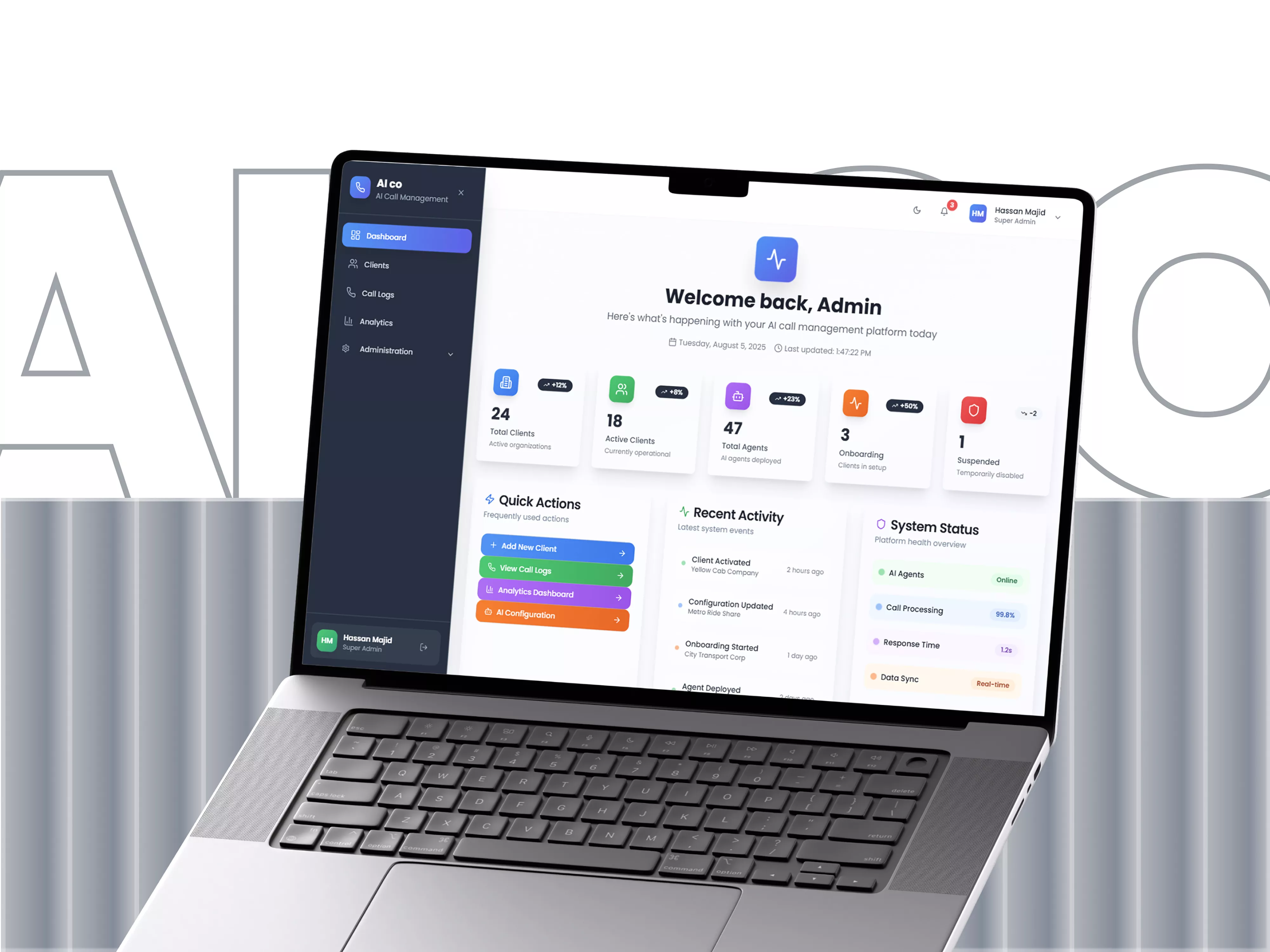
AICO helps medical transport teams take ride calls by phone. The helper books, checks, and updates trips in the dispatch system staff already use, instead of opening a second screen.
75%
Less call-handling load
98%
Scheduling accuracy
The problem
Ride call centers repeat the same requests all day: Where is my ride? Can I book? Can I cancel? Most riders still call. A chatbot that cannot change the actual schedule does not help when someone is waiting for pickup.
Adding more agents was the only way to keep up. Different operators also used different dispatch tools, so a one-off phone script would not travel from one client to the next.
- Staff spent hours on ride status, booking, and cancellation calls
- The live schedule lived in a dispatch system (TripMaster) that the phone team could not update quickly
- A wrong time or a missed cancel could mean a missed medical appointment
- The phone line was not connected to the dispatch system staff already trusted
- Only a person could book, cancel, or change a trip
- Leaders could not see how often calls led to a correct schedule
What we changed
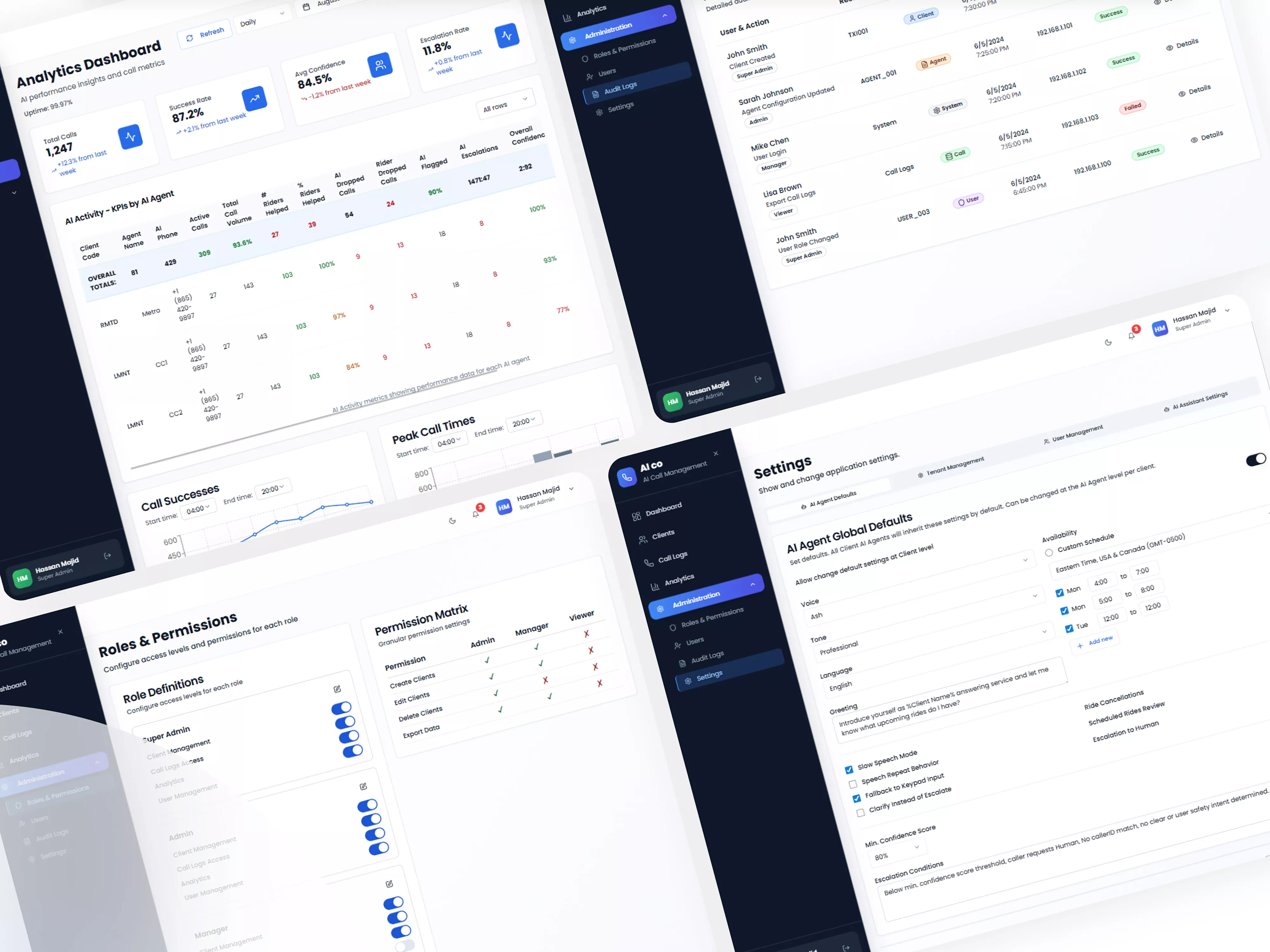
We built a phone helper that talks with the rider, then updates the dispatch system they already run. The schedule engine stayed. People stayed in the loop for anything that should not go out alone.
- Natural phone conversations for ride questions and booking
- Book, cancel, check arrival time, and send reminders without a second login
- Connects to TripMaster and other dispatch tools operators already use
- Checks before a change is saved, with a fallback if the system is down
A coordinator takes over when the helper is unsure, or when the request is not allowed to run on its own.
What changed in the numbers
75%
Less call-handling load
98%
Scheduling accuracy
MVP
Shipped for live medical-ride call workflows

Kevin McCarthy
CEO, AICO
Call handling efficiency has improved by 75%. Patient scheduling accuracy has increased to 98% with AI automation.
What this means for you
- A phone helper only works if it can change the real schedule, not just answer questions
- Plan for more than one dispatch vendor if your operators are not all on the same tool
- Track scheduling accuracy and handle time. Model scores do not tell you if Tuesday got easier
- Handing a call to a person is part of the design, not a failure
Questions people ask
Ride call centers repeat the same requests all day: Where is my ride? Can I book? Can I cancel? Most riders still call. A chatbot that cannot change the actual schedule does not help when someone is waiting for pickup.
AICO Healthcare saw 75% less call-handling load, 98% scheduling accuracy.
A coordinator takes over when the helper is unsure, or when the request is not allowed to run on its own.
Ready for a similar result?
Short assessment
Book a short assessment
We look at one live workflow and tell you whether this pattern fits, before you add another tool.
See if this fits our operationSend a note
Talk through a similar workflow
Tell us about the job your team already does. Use the form at the bottom of this page. No new login.
Talk through a similar workflowHow it works
What we chose to automate
These calls follow rules. A phone helper can look up a trip, book, cancel, and share an arrival time, as long as a person can take over and every change is logged.
- Handle ride lookup, booking, cancellation, arrival time, and reminders by phone
- Hand unusual cases to a coordinator with the call notes attached
- Track scheduling accuracy and how long calls take
How the pieces fit together
Phone calls, decision routing, and dispatch updates are separate pieces. The ride schedule can stay as it is while the phone helper improves.
- Phone service with call logging and recording rules
- A .NET layer that checks each request before it hits dispatch
- The helper updates TripMaster and other vendor endpoints through that layer
- If a request fails or confidence is low, the call goes to a person
When a person still takes over
A coordinator takes over when the helper is unsure, or when the request is not allowed to run on its own.
- Warm transfer to a live coordinator, with the transcript and what the helper tried
- No schedule change until confidence is high enough
- Call logs and sampling so patient-facing language can be checked
- A switch to turn a workflow off during rollout
What it connects to
- TripMaster dispatch system
- Phone service for inbound calls
- Other medical-ride vendor systems, through one adapter
- .NET services that check and route each action
Still losing hours to repetitive ride calls?
If your medical transport team still pastes between the phone and dispatch, we can look at the same pattern we used on AICO: help inside the job, with a person on the writes that can hurt.
RELATED WORK
Related case studies, services, and guides
Healthcare Operations
Learn moreWe retrofit AI into healthcare operations platforms: NEMT dispatch, appointment booking, call center automation, and care coordination. Voice agents and healthcare workflow automation land behind your permissions with HIPAA-aware data handling, audit trails, and human in the loop controls. Not clinical decision support. Operational AI for the software that already runs intake, scheduling, and dispatch. AICO, Healify, and Xlarity show the pattern in production.
AI Voice Agents for Operations
Learn moreAutomate operational conversations for staffing, healthcare, and dispatch. AI voice agents with human handoff, built for real call volume and governed actions.
Healify appointment platform
Learn moreMobile patient appointment booking case study: Healify cut booking time 85% and lifted patient engagement 200% with phone-first access.
Xlarity practice management
Learn moreMedical practice management and EHR case study: Xlarity puts records, appointments, follow-up, and role-specific portals in one system for doctors, clinics, hospitals, and insurers.
Dispatch automation article
Learn moreAutomate intake and coordinator handoffs in dispatch heavy operations without removing human review from critical routing decisions.