


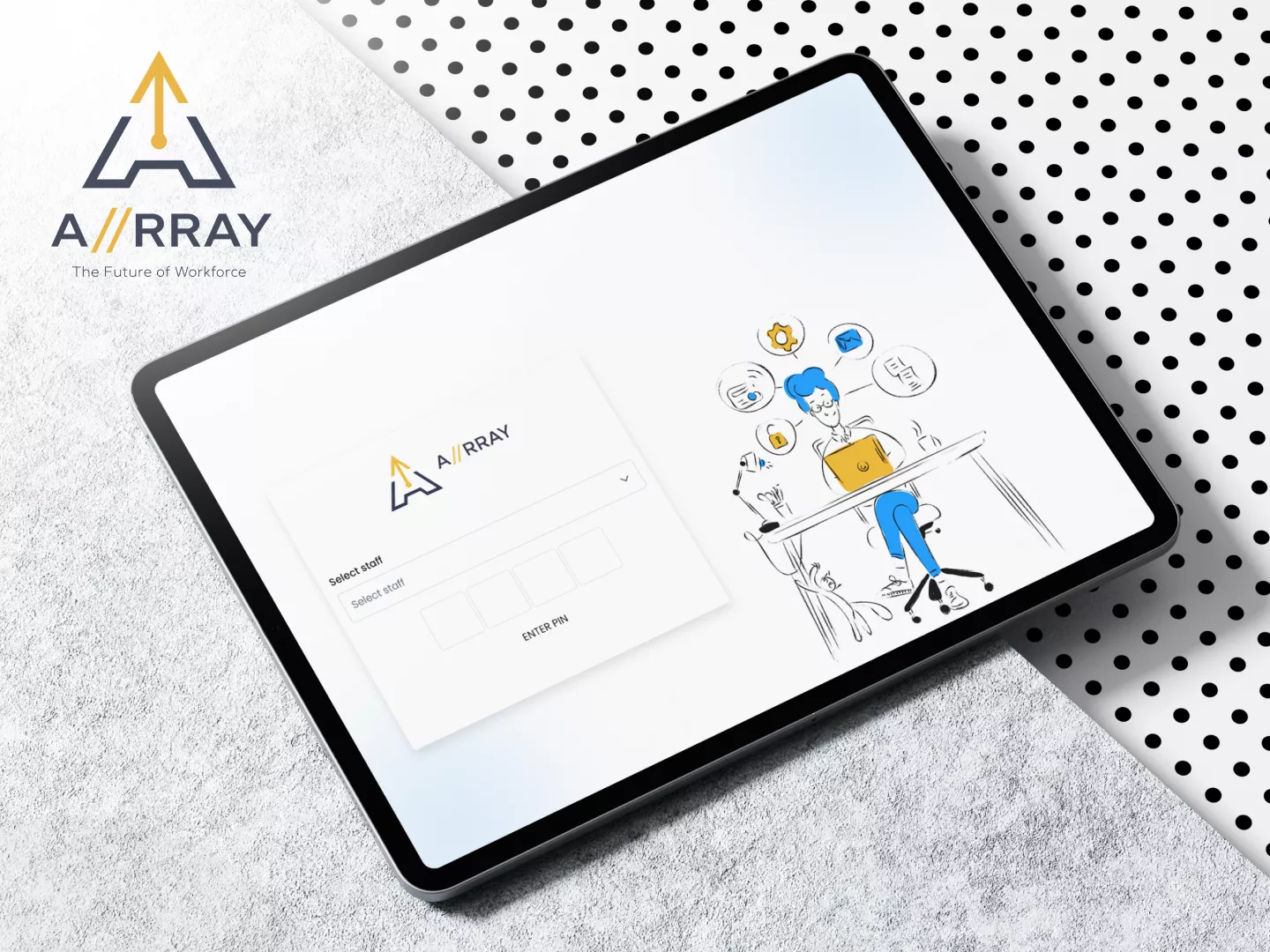
Workforce management / staffing operations: kiosk surface
On-site employees needed self-service workforce access without waiting for administrators: kiosk stations connected to the same platform as web and mobile.
80%
Kiosk self-service adoption
50%
Reduction in administrative overhead
Part of a larger product story. Unified Array Corp case study
The problem
High administrative overhead for workforce access: employees queued for admin help for routine self-service tasks.
Without kiosk stations tied to the shared platform, on-site workforce access remained a bottleneck for administrators.
- Manual admin handling of routine workforce access requests
- Low self-service adoption at physical locations
- No on-site touchpoint connected to centralized workforce data
- Physical locations lacked automated workforce access points
- Kiosk workflows not integrated with web and mobile permissions
- Administrators as single point of failure for on-site requests
What we changed
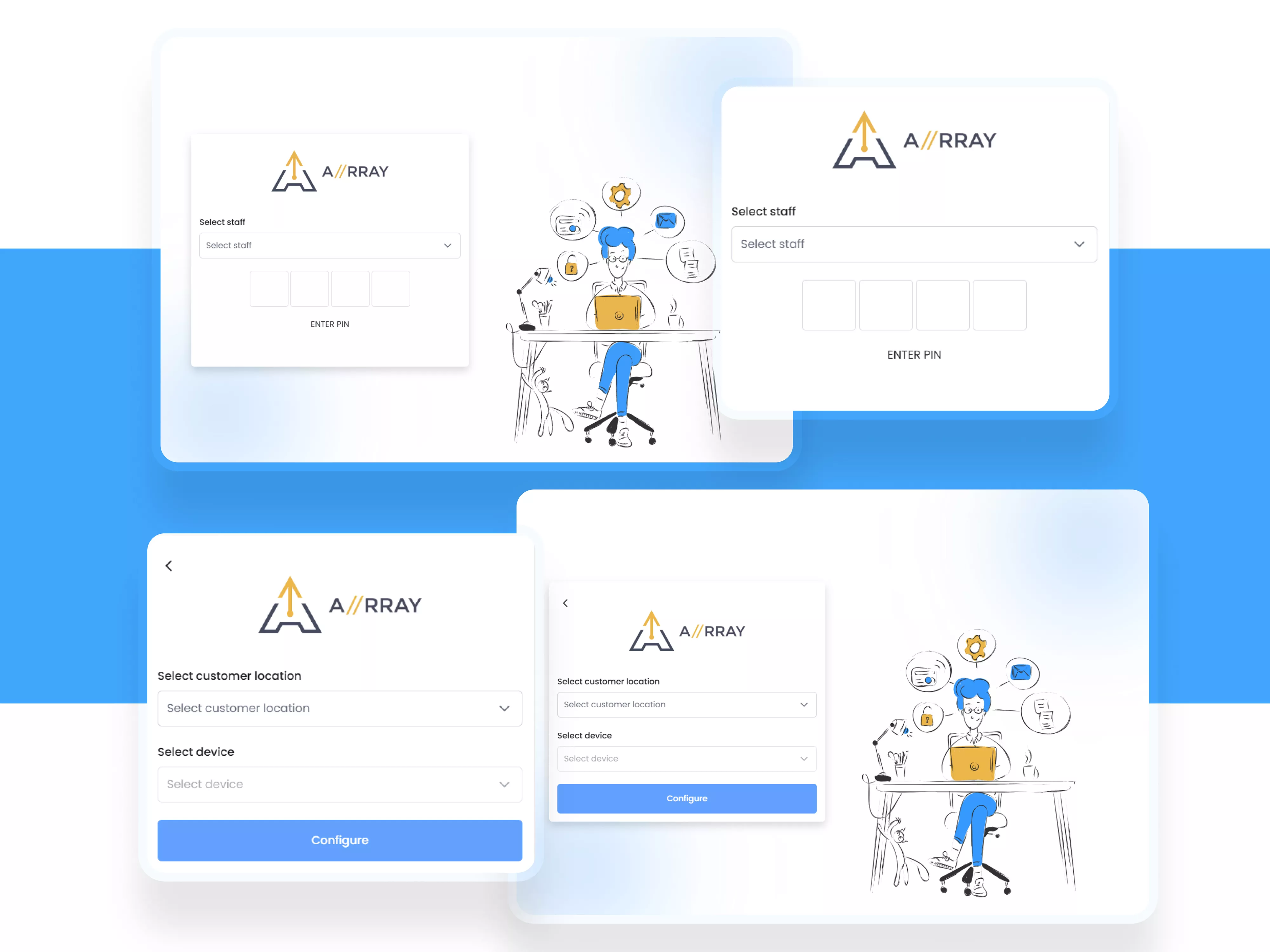
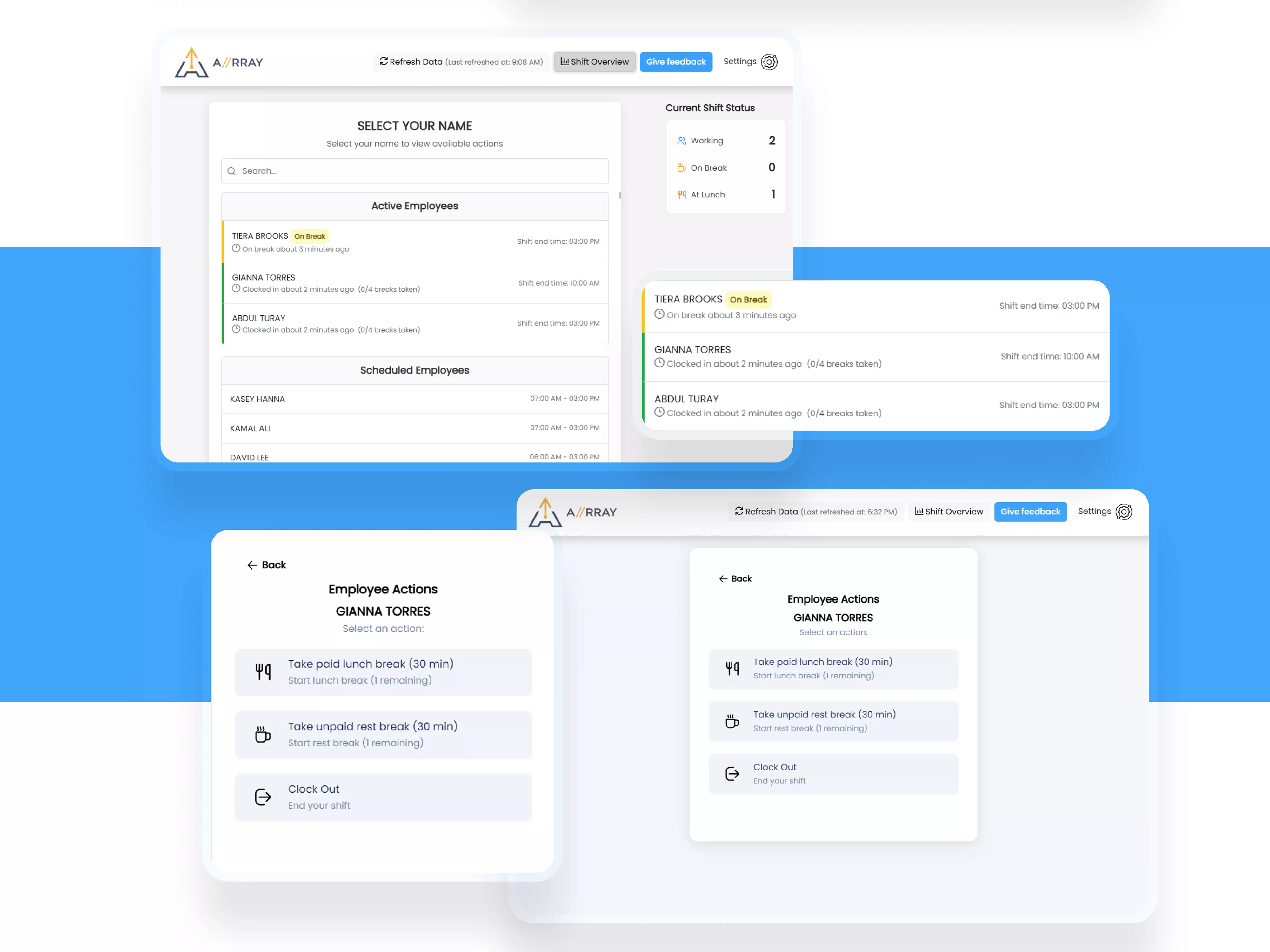
We implemented self-service kiosk stations integrated with the Array Corp workforce platform:
- Self-service workforce management at physical locations
- Automated access points reducing admin involvement
- Shared permissions and audit trails with web and mobile
- Employee-friendly flows for common workforce tasks
What changed in the numbers
80%
Kiosk self-service adoption
50%
Reduction in administrative overhead

Ryan Hafer
Director of Software Engineering, Array Corp
Kiosk adoption has improved employee self-service by 80%. Administrative overhead has decreased significantly with automated access points.
What this means for you
- Kiosk surfaces matter for deskless workers: not every user will adopt mobile
- Self-service adoption directly reduces admin workload metrics
Questions people ask
High administrative overhead for workforce access: employees queued for admin help for routine self-service tasks.
Array Corp saw 80% kiosk self-service adoption, 50% reduction in administrative overhead.
A named person still handles anything that is hard to undo, such as sending a message, changing a record, or making an exception.
Ready for a similar result?
Short assessment
Book a short assessment
We look at one live workflow and tell you whether this pattern fits, before you add another tool.
See if this fits our operationSend a note
Talk through a similar workflow
Tell us about the job your team already does. Use the form at the bottom of this page. No new login.
Talk through a similar workflowHow it works
What we chose to automate
Kiosk workflows with instrumented access patterns enable exception routing and voice fallback for employees who need human help after self-service attempts.
- Automated routing of kiosk exceptions to live coordinators
- Workflow reminders for incomplete self-service flows
- Analytics on kiosk adoption to prioritize automation paths
Other parts of this product
Schedules still live in a spreadsheet after you bought the tool?
If field teams skip the official screen, we can look at putting schedules and timesheets in the job they already do, the way we did for Array Corp.
RELATED WORK
Related case studies, services, and guides
Staffing and Workforce Operations
Learn moreWe retrofit AI into workforce management software: scheduling, time tracking, payroll-adjacent workflows, and multi-tenant client variants. Voice agents, staffing workflow automation, and recruiter copilots land inside your platform with permissions, audit trails, and human in the loop controls. Array Corp is production proof: 1,000+ employees managed while the platform was modernized and AI integrated.
Operational AI Workflow Automation
Learn moreGoverned workflow automation for staffing, HR, healthcare, and dispatch. Remove manual bottlenecks while keeping operators in control.