


Workforce management / staffing operations: web platform
Array Corp needed a single web platform to manage global workforce operations: scheduling, employee records, and operational dashboards: without fragmented admin processes across locations.
1,000+
Employees managed globally
Part of a larger product story. Unified Array Corp case study
The problem
Array Corp managed 1,000+ employees globally without a centralized workforce system: administrators lacked real-time visibility across locations.
Legacy web tooling could not scale to global workforce volume or provide the permissions model operators needed.
- Fragmented employee and scheduling data across regions
- No unified operational dashboard for workforce coordinators
- High manual effort for admin reporting and workforce access
- Administrators handled workforce access manually
- Scheduling changes lacked real-time visibility for coordinators
- No shared data layer with mobile and kiosk surfaces
What we changed
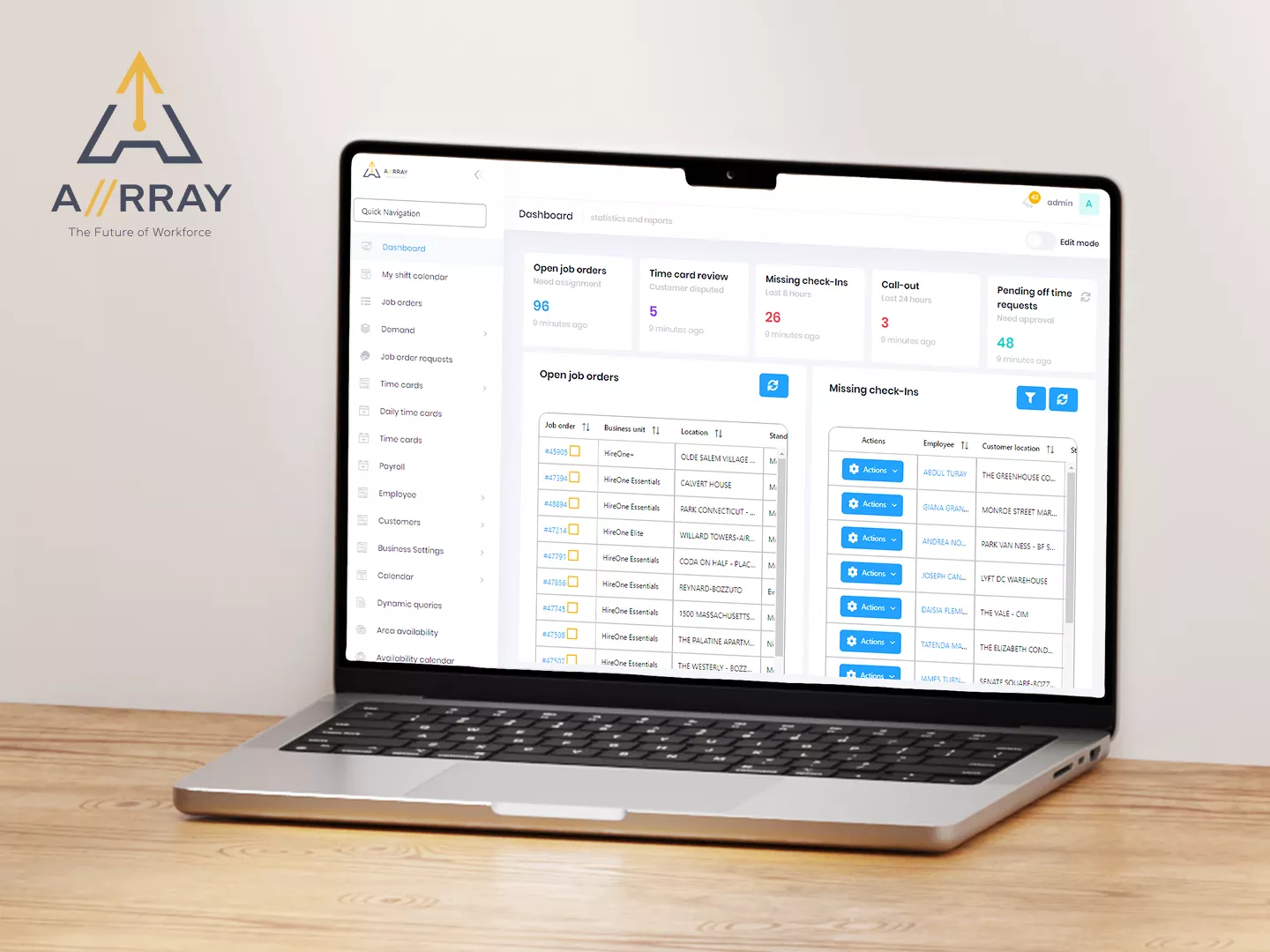
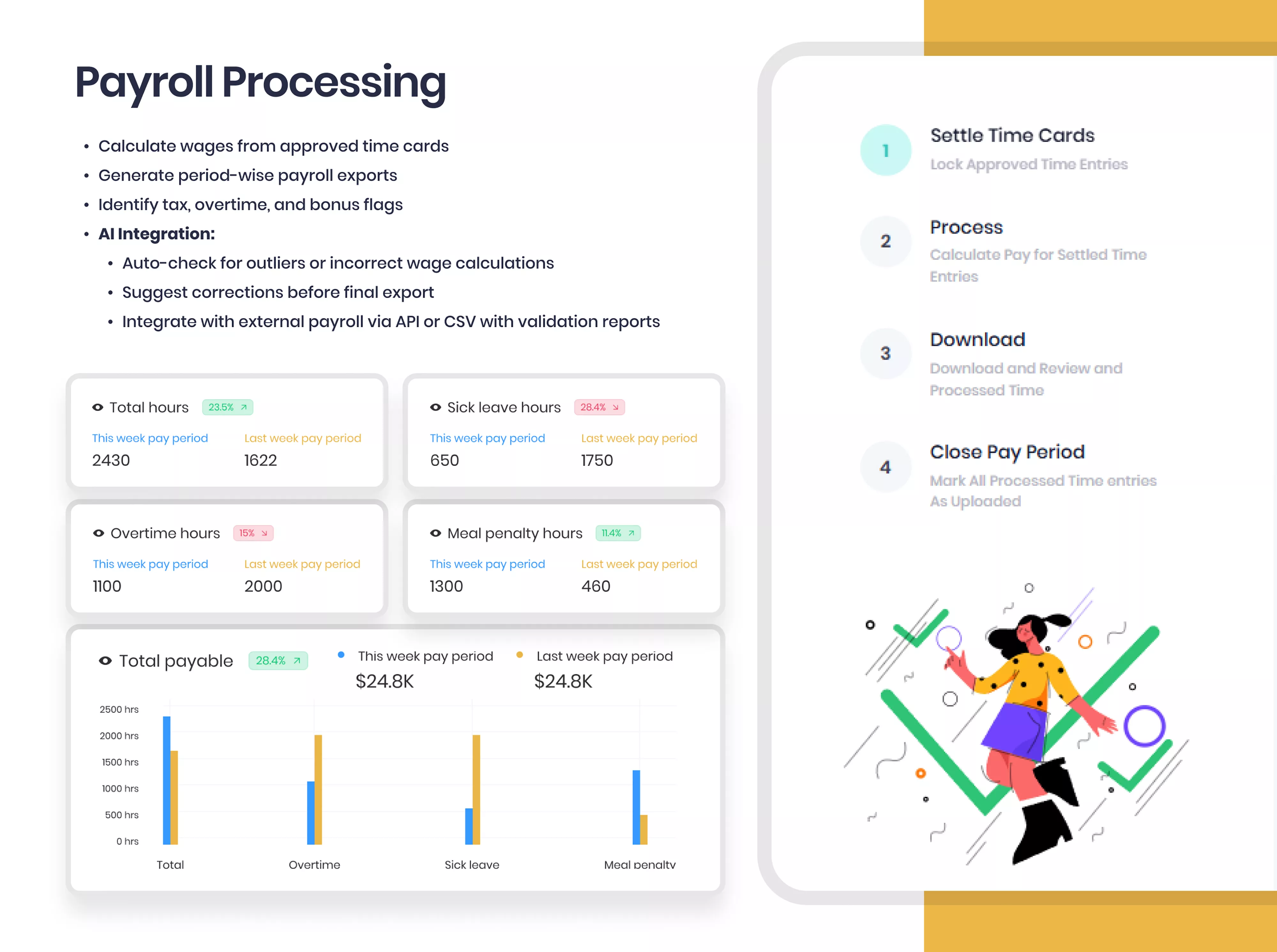
We built the Array Corp web platform as the operational hub for global workforce management:
- Centralized workforce management with real-time insights
- Global employee records and scheduling visibility
- Shared backend permissions model for mobile and kiosk surfaces
- Operational dashboards for coordinators and administrators
What changed in the numbers
1,000+
Employees managed globally
Real-time
Workforce insights across locations

Ryan Hafer
Director of Software Engineering, Array Corp
The web platform has transformed our global operations. We now manage 1,000+ employees seamlessly across multiple locations with real-time insights.
What this means for you
- Web platform is the operational hub: mobile and kiosk extend access, not replace core data
- Global workforce SaaS needs permissions before automation layers
Questions people ask
Array Corp managed 1,000+ employees globally without a centralized workforce system: administrators lacked real-time visibility across locations.
Array Corp saw 1,000+ employees managed globally.
A named person still handles anything that is hard to undo, such as sending a message, changing a record, or making an exception.
Ready for a similar result?
Short assessment
Book a short assessment
We look at one live workflow and tell you whether this pattern fits, before you add another tool.
See if this fits our operationSend a note
Talk through a similar workflow
Tell us about the job your team already does. Use the form at the bottom of this page. No new login.
Talk through a similar workflowHow it works
What we chose to automate
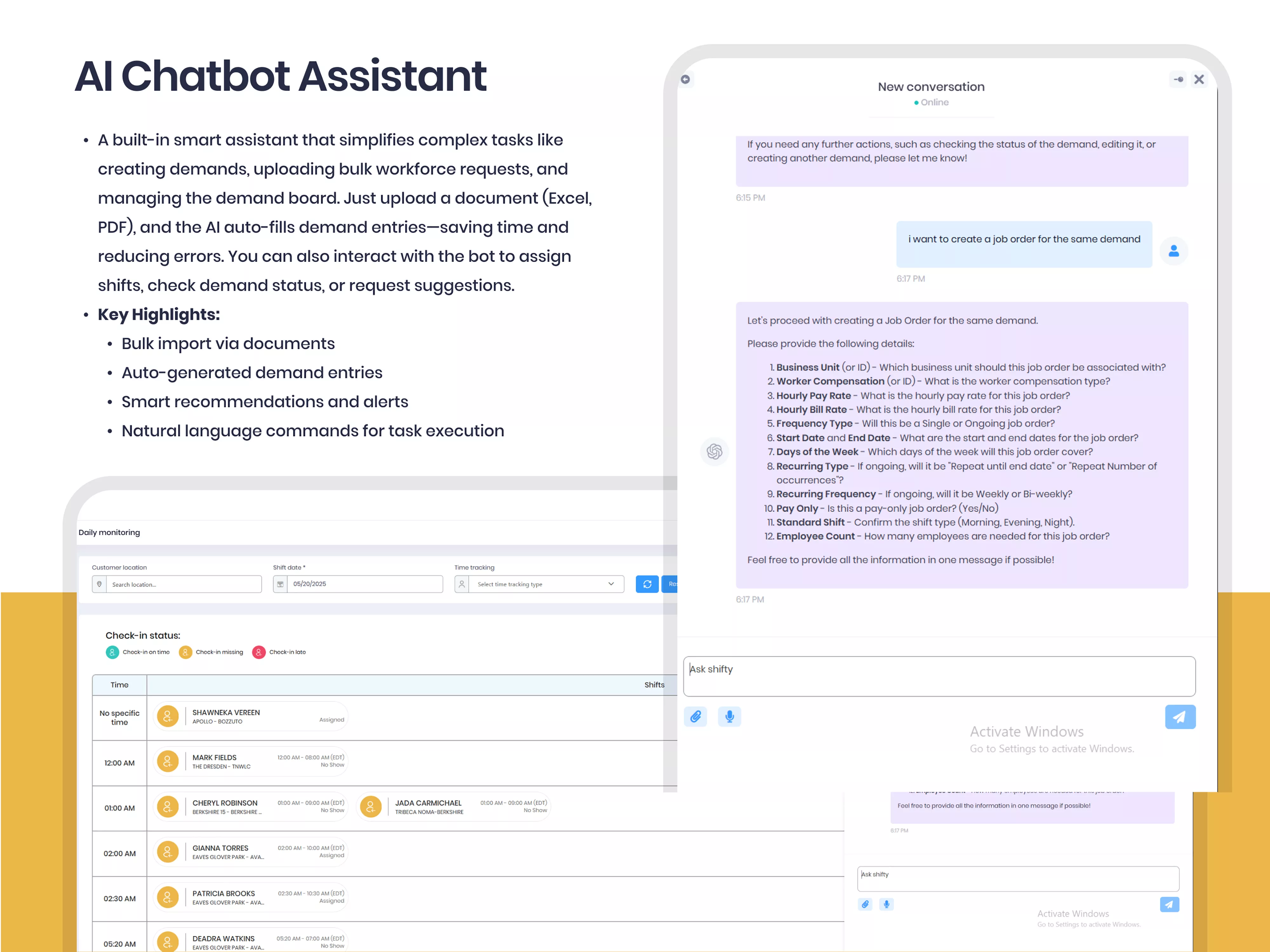
With a centralized web platform in place, coordinators can adopt copilots for workforce summaries and workflow automation for high-volume approval paths.
- Copilots summarizing workforce status for administrators
- Workflow automation for scheduling exceptions and approvals
- Voice agent handoffs from phone-heavy scheduling workflows
How the pieces fit together
The web platform serves as the system of record for workforce data consumed by mobile and kiosk surfaces: one permissions model, multiple access points.
- Multi-tenant RBAC for administrators and regional coordinators
- API layer shared with mobile check-in and kiosk self-service
- Phased rollout per location without disrupting live operations
Other parts of this product
Schedules still live in a spreadsheet after you bought the tool?
If field teams skip the official screen, we can look at putting schedules and timesheets in the job they already do, the way we did for Array Corp.
RELATED WORK
Related case studies, services, and guides
Staffing and Workforce Operations
Learn moreWe retrofit AI into workforce management software: scheduling, time tracking, payroll-adjacent workflows, and multi-tenant client variants. Voice agents, staffing workflow automation, and recruiter copilots land inside your platform with permissions, audit trails, and human in the loop controls. Array Corp is production proof: 1,000+ employees managed while the platform was modernized and AI integrated.
SaaS Modernization and AI Retrofit
Learn moreModernize legacy SaaS platforms without full rewrites: framework upgrades, permission cleanup, and AI enablement layers. Extend platform lifespan with operational AI.