


Medical equipment lifecycle, maintenance, and supplier tracking
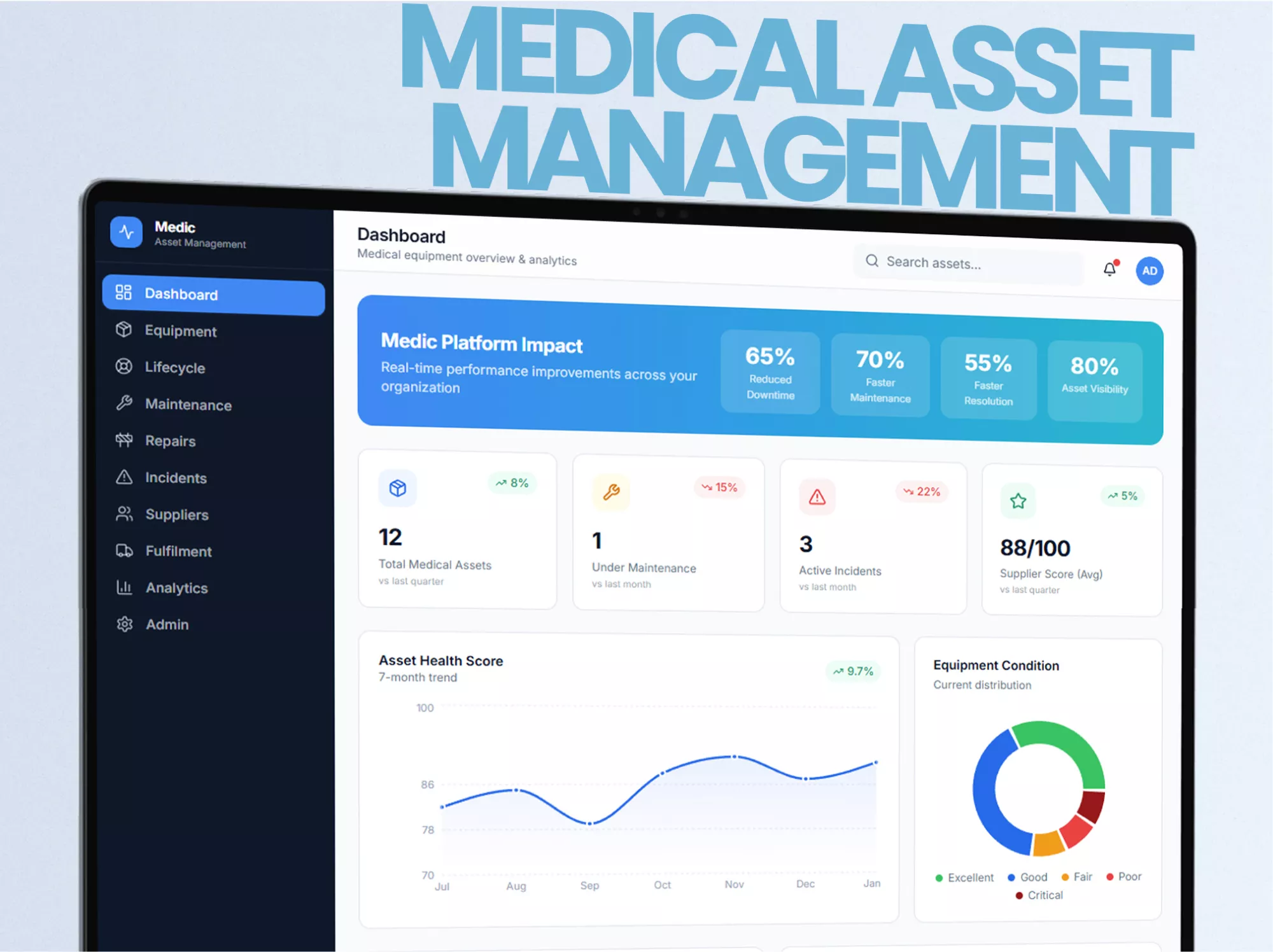
Medic is a medical equipment asset platform for teams who tracked devices, suppliers, maintenance, and incidents in separate processes. Results from the delivery: 65% less equipment downtime, 70% faster maintenance coordination, and 80% better asset visibility.
65%
Reduction in equipment downtime
70%
Faster maintenance coordination
55%
Improvement in incident resolution time
80%
Increase in asset visibility
The problem
Medical equipment, supplier coordination, maintenance, and incidents lived in separate processes. Teams could not see whether a device was in contract, in repair, or waiting on a supplier without calling around.
A spreadsheet of assets does not hold contracts, fulfilment, delivery, and repair history. Healthcare teams need one platform they can operate, here Angular, .NET Core, SQL Server, and ASP.NET Zero.
- Equipment lifecycle was not visible in one record
- Maintenance and interventions were tracked off to the side of the asset
- Incidents and supplier performance did not share the same timeline
- No shared view of contracts, fulfilment, and setup
- Repair and incident work was not tied to the equipment record
- Supplier scorecards lived outside the asset system
What we changed
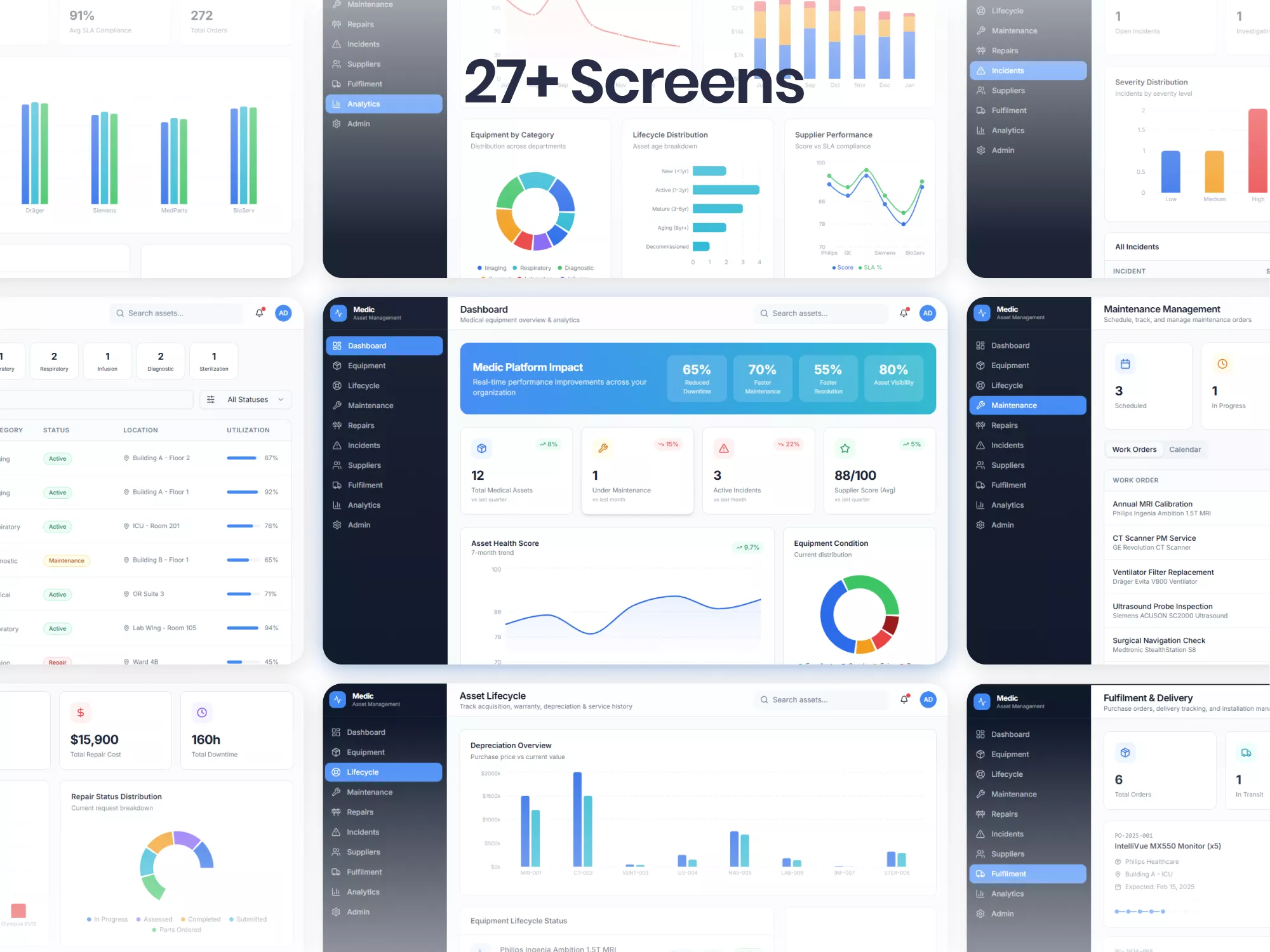
We built Medic as a centralized medical asset platform. Equipment lifecycle, contracts, fulfilment, delivery and setup, repairs, incidents, and supplier performance sit in one ASP.NET Zero application.
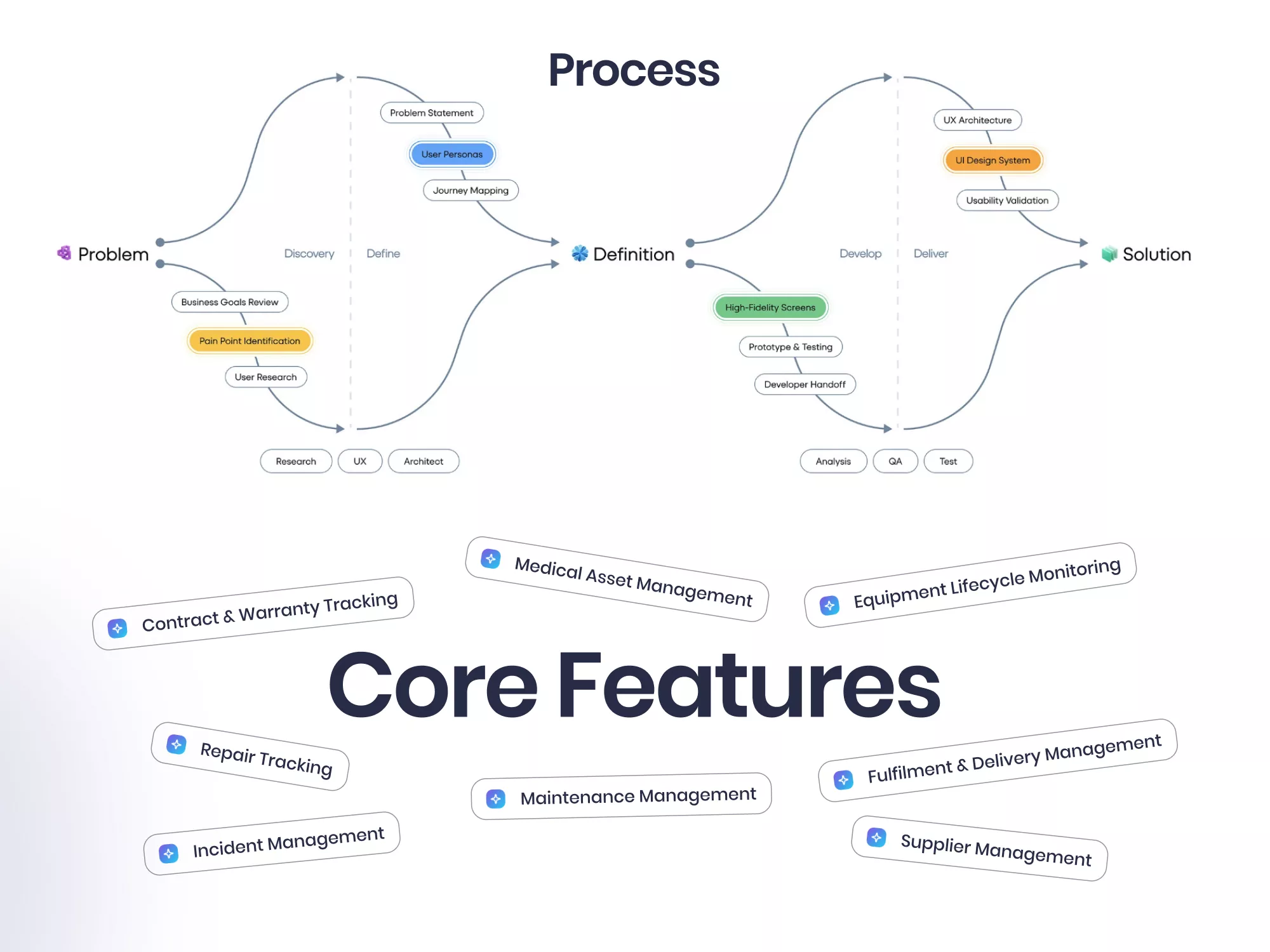
- Medical equipment asset and lifecycle monitoring
- Contract, fulfilment, delivery, and setup tracking
- Intervention, maintenance, and repair management
- Incident handling and supplier performance tracking
Clinical engineering still approves a repair, closes an incident, and signs a supplier action. The product records status. A named role still owns the change.
What changed in the numbers
65%
Reduction in equipment downtime
70%
Faster maintenance coordination
55%
Improvement in incident resolution time
80%
Increase in asset visibility
Equipment downtime dropped 65%. Maintenance coordination is 70% faster, with 80% better asset visibility.
Medic
What this means for you
- Medical asset software only helps if maintenance and incidents sit on the same record as the device
- Supplier performance belongs next to the equipment, not in a side sheet
- Contracts and fulfilment are part of the lifecycle, not a separate portal
- A known SaaS stack such as ASP.NET Zero matters when healthcare teams expect roles and history
Questions people ask
Medical equipment lifecycle: contracts, fulfilment, delivery and setup, maintenance, repairs, incidents, and supplier performance in one platform.
Angular, .NET Core, SQL Server, Entity Framework, Clean Architecture, and ASP.NET Zero.
Clinical engineering still approves repairs, closes incidents, and signs supplier actions. The product records the lifecycle. A person still owns the change.
Ready for a similar result?
Short assessment
Book a short assessment
We look at one live workflow and tell you whether this pattern fits, before you add another tool.
See if this fits our operationSend a note
Talk through a similar workflow
Tell us about the job your team already does. Use the form at the bottom of this page. No new login.
Talk through a similar workflowHow it works
What we chose to automate
Once assets, maintenance, and incidents share one record, later helpers can flag overdue service or a slow supplier. The first job is a trusted lifecycle, not a chatbot on the side.
- Keep equipment, contracts, and repairs on one timeline
- Give biomedical and procurement the same status
- Leave room for exception queues once the record is trusted
How the pieces fit together
The product uses Angular on the front, .NET Core and Entity Framework on SQL Server, and Clean Architecture on ASP.NET Zero so asset and incident rules stay testable.
- ASP.NET Zero multi-tenant SaaS foundation
- Clean Architecture for assets, maintenance, and incidents
- SQL Server persistence for equipment, contracts, and suppliers
When a person still takes over
Clinical engineering still approves a repair, closes an incident, and signs a supplier action. The product records status. A named role still owns the change.
- Role-based access for biomedical, procurement, and suppliers
- Incident close-out that a person confirms
- Contract and fulfilment changes with an activity history
What it connects to
- ASP.NET Zero
- Angular
- .NET Core
- SQL Server
- Entity Framework
Medical equipment still tracked in separate lists?
If downtime, repairs, and suppliers do not share one record, we can look at putting the equipment lifecycle in one product, the way we did on Medic.
RELATED WORK
Related case studies, services, and guides
Healthcare Operations
Learn moreWe retrofit AI into healthcare operations platforms: NEMT dispatch, appointment booking, call center automation, and care coordination. Voice agents and healthcare workflow automation land behind your permissions with HIPAA-aware data handling, audit trails, and human in the loop controls. Not clinical decision support. Operational AI for the software that already runs intake, scheduling, and dispatch. AICO, Healify, and Xlarity show the pattern in production.
ASP.NET Zero modernization
Learn moreFramework modernization and governed AI retrofit for production .NET SaaS platforms.
Legacy SaaS modernization review
Learn moreWe audit your underlying application architecture, database isolation patterns, and dependency chains on .NET, ABP.IO, or ASP.NET Zero. You receive a clear parallel-track plan that upgrades framework versions and injects governed AI capabilities into your core workflows without forcing a costly complete rebuild.
Healify appointment platform
Learn moreMobile patient appointment booking case study: Healify cut booking time 85% and lifted patient engagement 200% with phone-first access.